Preparing Clay When Handle Strips Drag, Tear or Slump
Start with well-wedged, soft, workable clay, make a steady trial pull and assess the strip before continuing.
How should I prepare clay when handle strips drag, tear or slump
Start with well-wedged, soft, workable clay, make a steady trial pull and assess the strip before continuing. Dragging, torn edges and slumping are reasons to check your process; avoid choosing a moisture adjustment from the symptom alone.
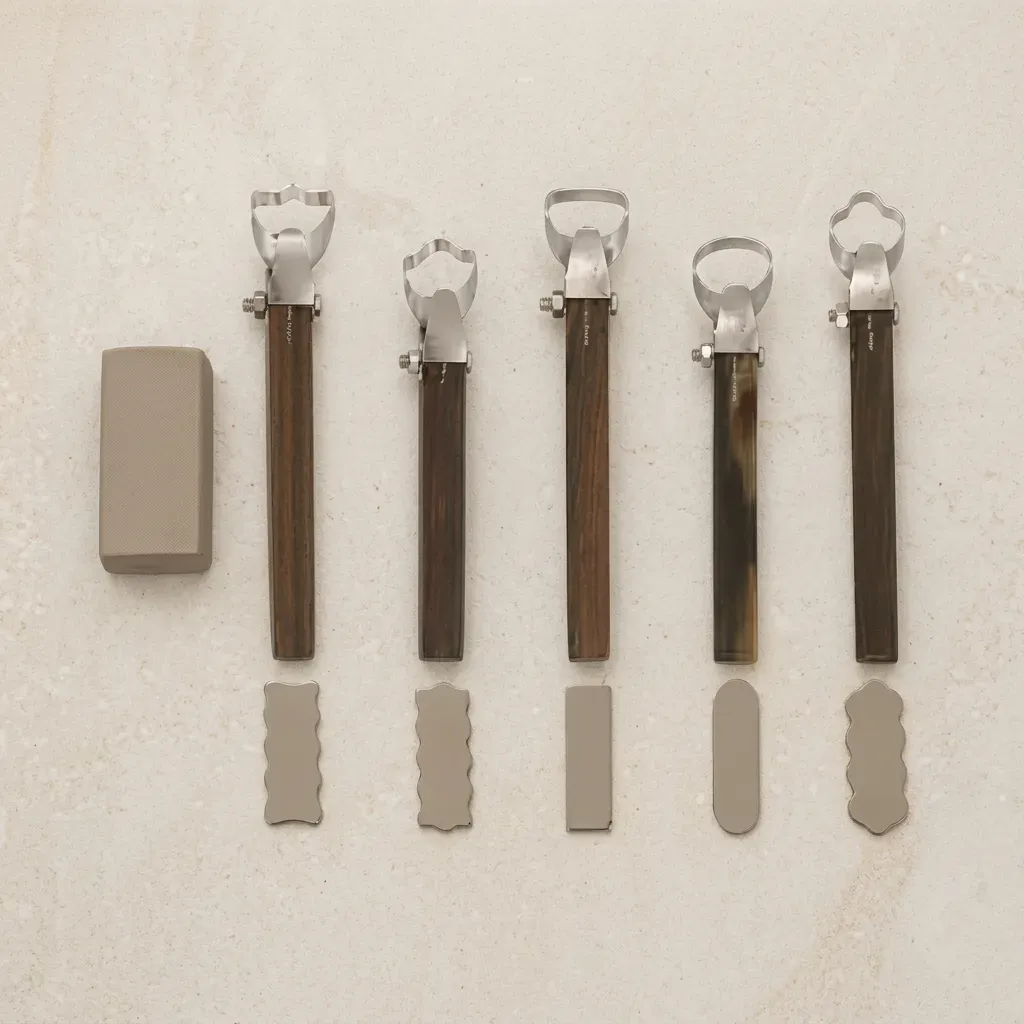
SourcingPo’s published sequence is to prepare well-wedged clay at a soft, workable consistency, select a profile, press and pull steadily through the clay, then cut the strip to length and let it firm slightly before attachment.
Use this suggested troubleshooting sequence alongside those instructions:
- Identify the mechanism. Check whether you draw the tool through clay or load clay into a barrel. The following starting sequence is for SourcingPo’s pull-through set.
- Compare the prepared clay. Press small portions from several places and note any differences in how they yield, including noticeably sticky or firm patches.
- Make a short trial strip. Keep the profile and pulling motion consistent. Look for interrupted edges, dragging marks or changes along the strip.
- Assess the intended curve. Gently shape a trial section and ease your support. If it slumps, pause, let it firm slightly and reassess before attachment.
These observations are a proposed checking method, not a validated readiness test. Change one thing at a time so you can compare the next strip.
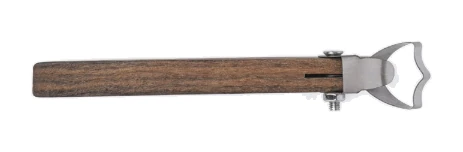
Does a pull-through handle maker need the same clay as a barrel extruder
Follow the instructions for the mechanism you are using. There is no universal softness ranking established by the guidance here. Assess both strip formation and how manageable the strip is afterwards.
- SourcingPo’s pull-through set: Its instructions specify well-wedged clay at a soft, workable consistency and pressing and pulling the tool steadily through the clay.
- A loop-style handle maker: In Tips and Tools: Foolproof Handles, Tania Rustage draws a loop tool through soft clay, keeping the full oval engaged to maintain a consistent profile. This describes her loop-tool method; it adds no operating requirement to the SourcingPo instructions.
- A barrel extruder: In DIY Extruder Dies, Tom Quest describes loading clay into a tube, where a ram or plunger pushes it through a shaped opening called a die. He explains that softer clay is easier to extrude, stiff clay drags on the die, and clay that is too soft is harder to handle as it emerges.
For a practical comparison, make a short trial using your own tool’s instructions. Observe how the strip forms and whether you can handle it for the intended shape. If you adjust consistency, compare another trial with the same profile. Do not assume that making the clay softer will solve every problem, or transfer a barrel-loading procedure to a pull-through tool.
How can I tell whether the clay is ready to hold a handle curve
As a practical check, look for similar yielding throughout the prepared clay, an evenly formed trial strip and a curve that stays in place when you ease your support. Treat these as observations to compare, rather than proof of a particular moisture level.
SourcingPo specifies well-wedged clay at a soft, workable consistency and allowing the cut strip to firm slightly before attachment.
Try this proposed readiness check with your chosen clay and profile:
- Compare several portions. Press small portions from different places and compare how they yield. Note differences rather than judging the whole piece from one spot.
- Inspect a short strip. Look along its length for changes in thickness, torn edges or local stretching. Record what you see without assigning a cause from appearance alone.
- Try the intended curve. Support a trial section while bending it, then ease your support and watch whether it opens, flattens or stretches. If it slumps, let it firm slightly and repeat the observation before attachment. If cracks appear during bending, pause and reconsider the trial rather than continuing to firm it.
This suggested check sets no moisture percentage or waiting time. Use it for the clay body and profile in front of you; do not treat curve retention alone as approval to attach the handle.
Does a torn strip always mean the clay is too dry
No. A torn strip is not enough reason to decide that the clay needs more water. SourcingPo’s guide says overly dry clay may crack at the edges. In a barrel-extruder context, Scott Creek’s instructions warn that clay which is both too soft and poorly wedged may tear during extrusion. Keep that warning within its barrel-extruder context; it does not diagnose tearing with SourcingPo’s set.
For tool condition and technique, the guidance available here does not establish whether a damaged edge or a particular pulling angle causes tearing with this SourcingPo set. Treat them as matters to inspect and discuss, without assuming a confirmed cause.
Use this proposed checking order:
- Review preparation. SourcingPo specifies well-wedged, soft, workable clay. Compare portions from several places before deciding whether to alter consistency.
- Repeat the instructed motion. SourcingPo instructs makers to press and pull steadily through the clay. On a short trial, note whether tearing appears during the pull or during later handling.
- Compare one change at a time. Keep the profile fixed while you compare trials. Record the difference without assuming that one improved strip proves the cause.
If tearing persists, ask SourcingPo for tool-specific advice. Provide the clay details, a clear view of the tool edge and an explanation of when the tear appears. Seek that advice before attempting sharpening or other modifications.
What should I check first if the clay sticks or drags
Check consistency first, then compare your pulling motion with the published instructions. SourcingPo’s guide says overly sticky clay can make the profile drag. Its use instructions specify well-wedged clay at a soft, workable consistency and pressing and pulling steadily through the clay.
Try this practical comparison:
- Check several places in the clay. Press small portions and note any noticeably stickier or firmer patches. Use SourcingPo’s stated consistency as your starting point.
- Make a short, steady trial pull. Keep the profile and clay the same while concentrating on the instructed motion. Note where sticking or dragging occurs.
- Compare a separate consistency trial if needed. If dragging persists, try another well-wedged portion at a soft, workable consistency, keeping the profile and motion the same. Compare the resulting strips before making more handles.
This is a suggested way to organise observations, not a proven remedy or a test that identifies every cause. Avoid changing several things together: the aim is to see what differs between trials. If the problem persists, ask for guidance for this tool rather than adopting lubricants or tool modifications from another maker’s instructions.
For broader context, see the clay handle maker guide.
What should I change if a handle strip slumps after shaping
Pause, support the shape and let the strip firm slightly before reassessing it for attachment. SourcingPo instructs makers to cut the strip to length and allow it to firm slightly before attaching, without specifying a fixed waiting time.
Try this proposed reassessment:
- Consider a support. In her loop-tool method, Tania Rustage drapes shaped handles over a round tube to keep their shape, then covers them in plastic. Consider that support option for a trial handle; it is her method, not an additional SourcingPo instruction.
- Recheck the curve as the strip firms. Ease your support and watch whether it holds or continues to flatten or open out. If it still slumps, allow further firming and reassess before attachment.
- Check before reshaping. Try a gentle adjustment on a trial section and watch for visible edge cracking. SourcingPo’s guide says overly dry clay may crack at the edges, so do not aim for maximum firmness.
These are observation steps for your clay body and profile, not a guaranteed cure for slumping or a guarantee of a sound join. In barrel extrusion, Tom Quest notes that clay which is too soft is harder to handle as it emerges; that observation does not establish why a SourcingPo pull-through strip slumps.
For wider shaping and attachment context, see the SourcingPo clay handle maker guide. The product on sale here is the 5-piece pottery handle making tool set. The price on the product page is £40.98. Check that price again before you order. View the product
References
- The Ultimate Guide to Clay Handle Maker Tool in the UK | SourcingPo
- Pottery Handle Extruder Set for Mug Cup Handles
- SourcingPo Pottery Handle Making Tools UK
- Tips and Tools: Foolproof Handles
- DIY Extruder Dies
- SCP_WallMount.pdf